
SHINING ON
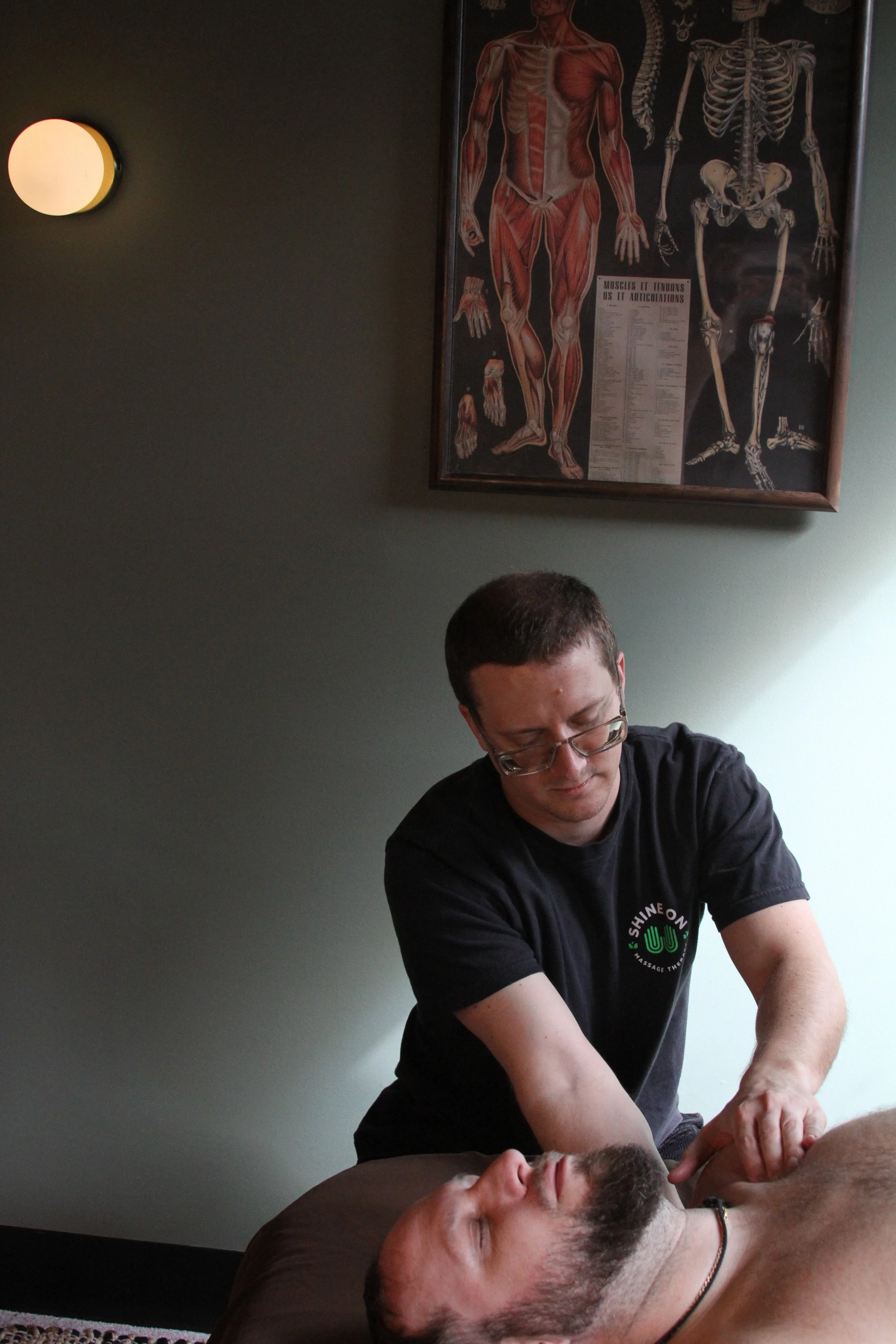
Rolfing with Sean Kengla
Learn more about Rolfing with Sean Kengla, our dedicated Rolfer!
The Ten Series
Rolfing is traditionally structured as a systematic Ten Series—a progressive set of 10 one-hour sessions where each visit targets a specific layer or segment of the body.
Sessions 1–3 (The Superficial Layer): Focus on freeing up breath, mobilizing outer layers of tissue, and balancing superficial tension around the ribs, chest, and legs.
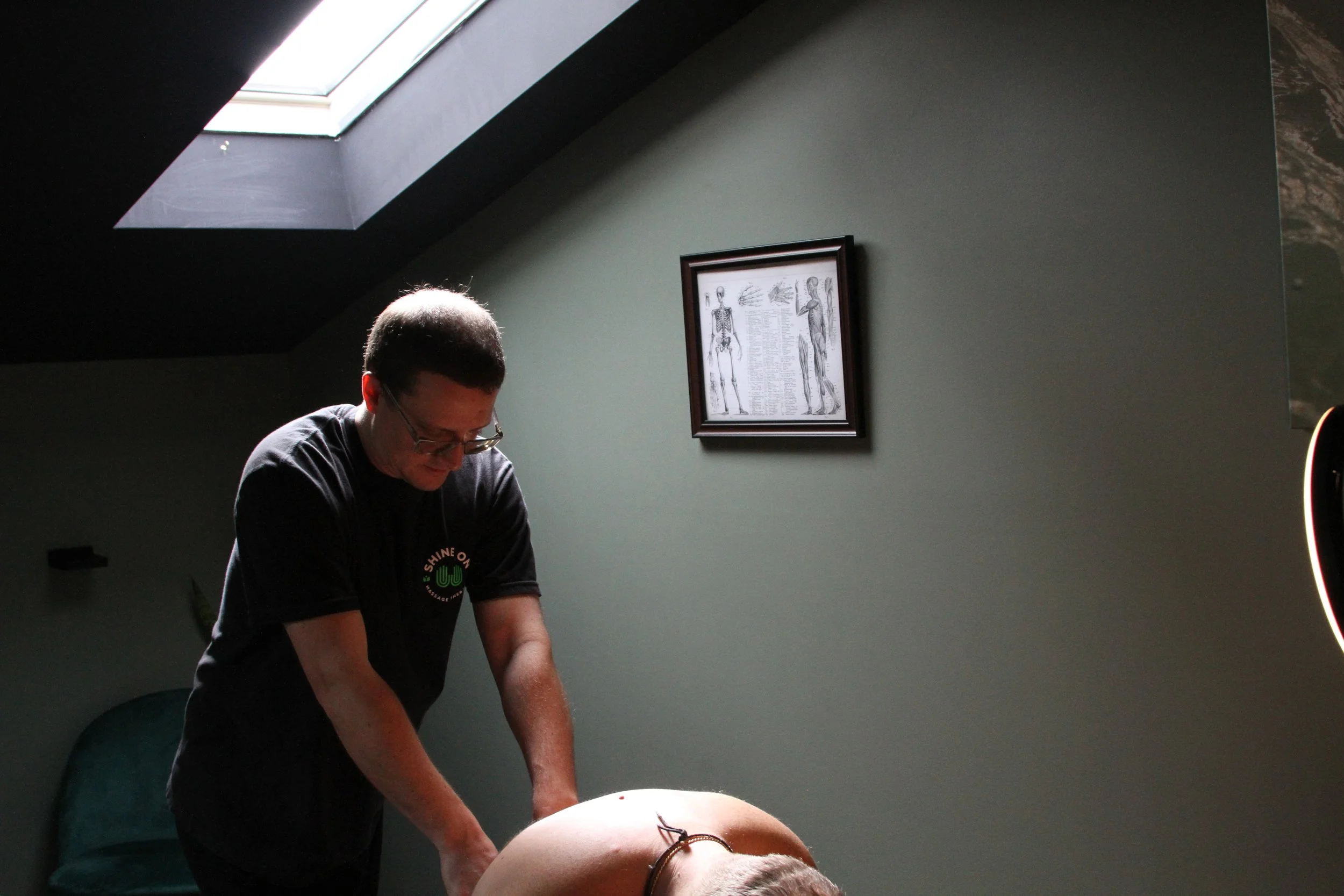
Sessions 4–7 (The Core/Deep Layer): Work deep into the pelvis, spine, and legs to establish a stable foundation and vertical support from the ground up.
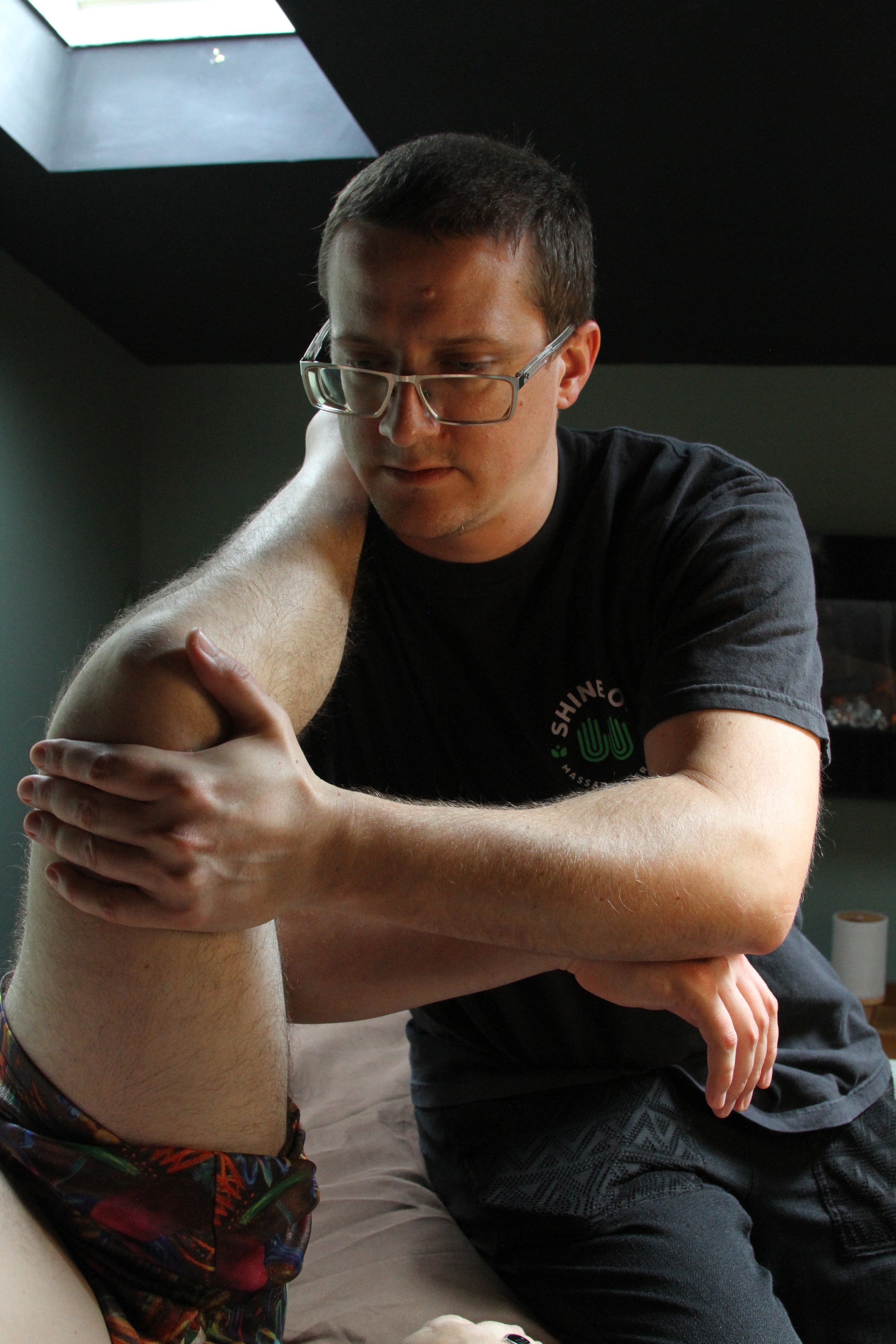
Sessions 8–10 (Integration): Blend the upper and lower body together to create a unified, adaptable, and long-lasting pattern of balanced movement.
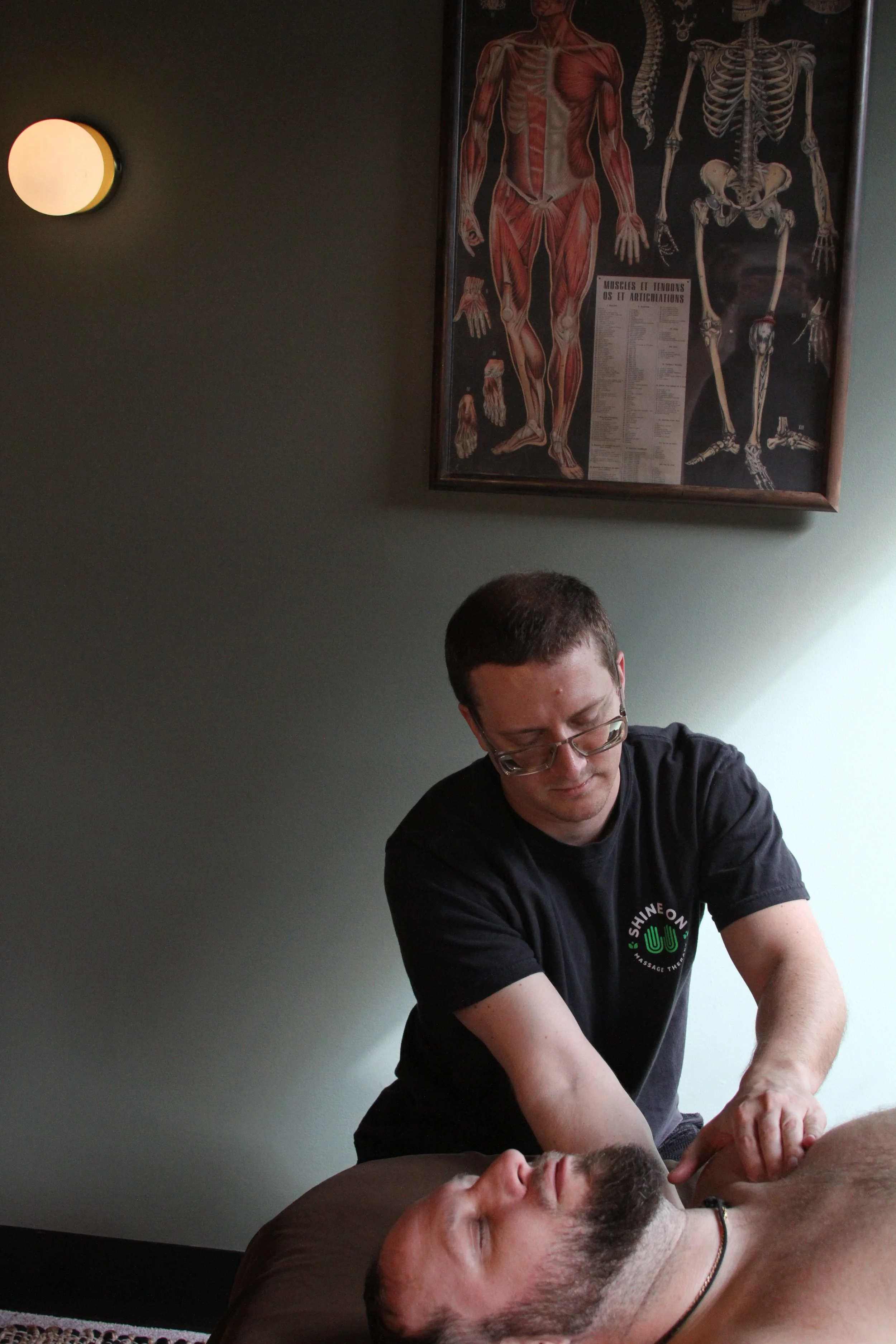
Start your journey to alignment and show your posture who’s boss by booking a Rolfing Session with Sean!
Discover Some of Our Specialized Massage Techniques
At Shine On, we believe that every-body is different—which is why we're always expanding our knowledge and offering specialized techniques to better meet your unique needs. Whether you're looking to improve movement, recover from physical activity, or address long-standing tension patterns, these advanced approaches may be exactly what you're looking for.
Rolfing® Structural Integration
Rolfing is a specialized form of bodywork that focuses on the body's connective tissue, or fascia, to improve posture, movement, and overall alignment. By releasing restrictions caused by stress, injuries, and everyday habits, Rolfing helps restore balance throughout the body and addresses the underlying causes of tension rather than just the areas where discomfort is felt.
-
Chronic pain and tension
Poor posture
Limited flexibility and mobility
Recovery from old injuries
Improved body awareness and movement efficiency
Because Rolfing works with deeper connective tissues, clients often notice lasting improvements in how they stand, walk, and move throughout their daily lives.
The Alexander Technique
The Alexander Technique combines gentle hands-on guidance with movement education to help improve posture, balance, and body awareness. By identifying and changing everyday movement habits that contribute to tension and discomfort, it encourages more natural, efficient movement and helps reduce unnecessary strain.
-
Neck and back discomfort
Muscle tension
Poor posture
Balance and coordination
Stress-related physical tension
Improving everyday movement and body awareness
It's an excellent option for anyone looking to move more comfortably, whether you're sitting at a desk, exercising, or simply going about your daily routine.
Sports Massage
Sports Massage is designed for anyone with an active lifestyle—not just athletes. Using a variety of techniques, it helps reduce muscle tension, improve flexibility, enhance circulation, and support recovery before or after physical activity, keeping your body performing at its best.
-
Muscle soreness
Faster recovery after exercise
Increased flexibility
Improved range of motion
Injury prevention
Performance support
Reducing muscle fatigue
Whether you're a weekend warrior or a competitive athlete, Sports Massage can be an effective part of keeping your body healthy and moving well.
Which Technique Is Right for You?
Every person's goals are different. During your appointment, your therapist can help determine which approach—or combination of techniques—will best support your needs.
If you're curious about trying one of these specialized services, we'd love to help you discover what works best for your body. Feel free to ask our team any questions or book an appointment to experience these techniques firsthand.
Why Massage & Contrast Therapy Are the Perfect Pair
Massage therapy and contrast therapy each offer unique benefits—but together, they create a powerful combination for recovery and overall wellness. While massage focuses on relieving muscle tension and improving mobility, contrast therapy supports circulation and recovery through alternating heat and cold exposure.
What Is Contrast Therapy?
Contrast therapy involves alternating between a sauna and a cold plunge. The heat helps relax muscles and increase circulation, while the cold may reduce inflammation, support recovery, and leave you feeling refreshed. This combination has become a popular recovery tool for athletes and wellness enthusiasts alike.
Why Pair Them Together?
Massage therapy helps relieve muscle tension, improve flexibility, and promote relaxation. Contrast therapy complements these benefits by supporting circulation, reducing post-exercise soreness, and encouraging recovery.
Together, they can help you:
Relieve muscle tension
Improve circulation
Increase flexibility and mobility
Reduce soreness after activity
Promote relaxation and recovery
Support overall wellness
Which Should You Do First?
The best order depends on your goals.
For relaxation: Many people enjoy a massage followed by the sauna and cold plunge for a deeply relaxing experience.
For recovery: Some active individuals prefer contrast therapy before a massage to warm the muscles and prepare the body for focused bodywork.
Our team is happy to help you choose the approach that's right for you.
Who Can Benefit?
You don't have to be an athlete to enjoy this combination. Massage and contrast therapy are great for:
Busy professionals
Gym-goers and active individuals
People with physically demanding jobs
Anyone experiencing everyday muscle tension
Those looking to prioritize self-care and recovery
Invest in Your Recovery
Recovery is an important part of maintaining your overall health—not just after exercise, but in everyday life. Whether you choose massage, contrast therapy, or both, taking time to care for your body can help you move better, feel better, and perform at your best.
If you're ready to experience the benefits of pairing massage with contrast therapy, we'd love to help you find the combination that works best for you.
10 Massage Myths You Can Stop Believing
❌ Myth #1: "Massage should hurt to work."
Truth: Not at all!
While some techniques can be intense, pain doesn't equal progress. A good massage works with your body—not against it. Sometimes the most effective work feels surprisingly gentle.
Remember: "No pain, no gain" doesn't apply to every massage.
❌ Myth #2: "Massage flushes toxins out of your body."
Truth: This is one of the biggest myths.
Your liver and kidneys are your body's detox team. Massage supports circulation and lymphatic flow, but it doesn't magically "push toxins out."
Hydration afterward is still a great idea because your body feels better when it's well hydrated.
❌ Myth #3: "You only need a massage when you're in pain."
Truth: Waiting until you're hurting is like waiting until your car breaks down before getting an oil change.
Regular massage can help maintain healthy muscles, improve mobility, and manage stress before discomfort builds up.
❌ Myth #4: "Deep tissue is always better."
Truth: It depends on your goals.
Some people benefit from deep pressure.
Others get better results from lighter, more targeted techniques.
The best massage is the one your body actually needs.
❌ Myth #5: "Drinking tons of water after a massage flushes out toxins."
Truth: (There's those "toxins" again!)
Water doesn't flush out massage toxins because that's not how massage works. However, staying hydrated supports normal body function and can help you feel your best after a session.
❌ Myth #6: "If you're sore the next day, it was a great massage."
Truth: Not necessarily.
Some soreness can happen—especially if areas haven't been worked on in a while—but soreness isn't the goal.
Many amazing massages leave you feeling refreshed instead of sore.
❌ Myth #7: "Massage is just a luxury."
Truth: Relaxation is wonderful—but massage can also be part of a wellness routine.
People use massage to help manage stress, improve movement, support recovery, and simply take care of themselves.
❌ Myth #8: "Massage breaks up knots."
Truth: Muscles don't actually have little knots tied in them.
What people call "knots" are often areas of increased muscle tension or trigger points. Massage helps those tissues relax and move more comfortably.
❌ Myth #9: "One massage will fix everything."
Truth: We wish! 😄
If tension has built up over months or years, it usually takes consistency—not one appointment—to create lasting changes.
Think of massage like going to the gym or brushing your teeth. Consistency matters.
❌ Myth #10: "You have to be completely silent during a massage."
Truth: Nope!
Want to chat? Great.
Want complete silence? Also great.
The session is about your comfort. The only thing your therapist wants is to know if the pressure, positioning, or temperature needs adjusting.
Massage is surrounded by a lot of myths, but understanding how your body actually works helps you make better decisions for your health.
Whether your goal is relaxation, better mobility, less tension, or simply taking an hour for yourself, massage is most effective when it's part of a consistent wellness routine—not just something you book when you're already hurting.
Body Facts That Might Surprise You
💪 1. Your muscles never truly "turn into fat."
If you stop exercising, muscles get smaller (atrophy), while fat cells can grow—but one never transforms into the other.
🧠 2. Your brain uses about 20% of your body's energy.
Even though it only makes up around 2% of your body weight, it's constantly working.
😌 3. Stress literally changes your muscles.
When you're stressed, your nervous system tells muscles to stay slightly contracted—especially in your neck, shoulders, and jaw.
👉 That's one reason massage can feel so relieving.
❤️ 4. Your heart beats about 100,000 times every day.
That's over 35 million beats every year!
🩸 5. Your blood vessels would stretch around 60,000 miles if laid end to end.
That's enough to circle the Earth more than twice.
🌙 6. Most healing happens while you sleep.
Your body repairs muscles, balances hormones, and restores tissues overnight.
Massage and good sleep make a great team.
⚡ 7. Your muscles make up about 40% of your body weight.
That's over 600 muscles working together every day just to help you move and breathe.
😬 8. Your jaw is one of the strongest muscles in your body.
Many people unknowingly clench their jaw during stress or sleep, which can lead to headaches and neck tension.
⭐ 9. Deep breathing actually helps your muscles relax.
Slow breathing activates your "rest and digest" nervous system, making it easier for muscles to let go of tension.
Massage often encourages this naturally.
🦶 10. Your feet contain over 7,000 nerve endings.
No wonder a foot massage feels so amazing!
🤍 11. Your lymphatic system doesn't have a pump.
Unlike your heart pumping blood, lymph moves through muscle movement, breathing, and body movement.
Massage can help encourage healthy lymph flow.
🤲 12. Touch is one of the first senses we develop.
It's also one of the last senses we keep as we age, making therapeutic touch incredibly meaningful throughout life.
😊 13. Smiling—even a fake one—can reduce stress hormones.
Your brain responds to facial expressions in surprising ways!

Our bodies are pretty incredible. ✨
The more you understand how your body works, the better you can take care of it. Massage isn't just about relaxation—it's about supporting the muscles, nervous system, circulation, and recovery that keep you feeling your best.
What Does It Take to Be a Massage Therapist?
When most people think of massage therapy, they picture a relaxing room, calming music, and someone receiving a massage. What many don't see is the dedication, strength, education, and passion that go into becoming a massage therapist.
Massage therapy is more than a career—it's a profession built on understanding the human body, connecting with people, and committing to lifelong learning.
-
Whether someone is dealing with chronic pain, recovering from an injury, managing stress, or simply looking for a moment to relax, massage therapists have the opportunity to make a meaningful difference in someone's day.
Sometimes the biggest impact isn't fixing a problem—it's helping someone feel heard, cared for, and supported.
-
For many therapists, the human body is endlessly fascinating.
Muscles, joints, posture, movement patterns, and the way everything works together create a puzzle that is unique to every client. Understanding anatomy and how the body responds to stress, injury, and daily habits allows therapists to tailor each session to the individual's needs.
Many therapists are lifelong students, constantly learning new techniques and deepening their understanding of how the body functions.
-
New research, techniques, and approaches continue to emerge, and successful therapists remain curious and committed to expanding their knowledge. Continuing education allows therapists to better serve their clients and grow in their profession.
Learning doesn't stop after massage school—it continues throughout a therapist's entire career.
-
Every client walks through the door with a different story.
Some are dealing with physical pain. Others may be carrying stress, anxiety, grief, or the weight of a busy life. A great massage therapist understands that every person deserves to be met with patience, respect, and compassion.
Being present and attentive can be just as important as the techniques being used during a session.
-
Clients often provide important clues about what they are experiencing through conversation, body language, and feedback during a session. Understanding their goals and concerns helps create a treatment plan that supports their individual needs.
The best therapists know that every session starts by listening.
-
A therapist may spend hours each day on their feet while using their hands, arms, shoulders, and core muscles to perform treatments. Proper body mechanics, strength, and self-care are essential for providing effective treatments while maintaining their own health and well-being.
Just as clients are encouraged to take care of their bodies, therapists must do the same.
Being a massage therapist requires much more than learning massage techniques. It takes compassion, dedication, physical endurance, curiosity, and a genuine desire to help others.
Behind every massage session is a professional who has invested time, energy, and heart into understanding the body and supporting the well-being of others.
And while clients may only see an hour of the work, the passion and commitment behind that hour often represent years of learning, practice, and care.
Why We Chose This Profession
Every massage therapist's journey is a little different. Some are drawn to the science of anatomy and movement, while others are inspired by a desire to help people feel better in their bodies. Whatever the path, most therapists share a common passion for supporting health, wellness, and quality of life. It is a profession that requires both skill and heart, and that is what makes it so rewarding.
Feel Good Longer: Your Aftercare Guide
A massage is a powerful reset for your body—but it’s not a one-time fix. Just like going to the gym once won’t build lasting strength, one session can’t undo weeks (or years) of tension. The real magic happens when you support your body after you leave the table.

✔ Drink plenty of water
✔ Take it easy for the rest of the day
✔ Gentle stretching (nothing too intense)
✔ Listen to your body—rest if you need it
✔ Avoid heavy workouts right after
✔ Keep that relaxed mindset going
Little things make a big difference. And when massage becomes part of your routine, not just a treat, that’s when you start to feel real, lasting change.

Pro tip: A sauna session after your massage can help your body relax even deeper
Understanding Tipping in Massage Therapy
Tipping in the wellness space can sometimes feel unclear, so here’s a quick guide:
Massage therapy is physically and mentally demanding, especially during longer sessions
A 60, 90, or 120-minute massage requires continuous focus, strength, and attention
Gratuity is one way many clients choose to show appreciation for that level of care
While never required or expected, a common range is 15–25%, depending on your experience
For longer sessions, tipping often reflects the increased time and physical effort involved

At the end of the day, the most important thing is that you feel taken care of—but understanding this helps align your experience with the level of care being provided. It is also a common question that we are asked, so we just wanted to break it down to clear the air! Never Expected! Always Appreciated!
Finding the Right Massage for Your Body
To make things a little easier, here’s a guide to how our services are designed to support you:
🌿 Melt & Unwind
For slowing down, softening the body, and calming the nervous system
Gentle Swedish – A light, flowing massage designed to relax the body and quiet the mind.
Custom Therapeutic – A personalized session that can lean into relaxation while still addressing areas of tension.
Prenatal – Gentle, supportive care to help moms-to-be feel more comfortable and at ease.
🔥 Tension Relief & Deep Reset
For releasing chronic tightness, stubborn knots, and built-up stress
Deep Tissue – Focused, intentional work that targets deeper layers of muscle to relieve long-held tension.
Custom Therapeutic – Can be tailored toward deeper, more focused work where your body needs it most.
Rolfing – A structural approach that works with fascia to realign and restore balance within the body.
🏃♀️ Movement & Performance
For active bodies, recovery, and improving mobility
Athletic – Designed to support muscle recovery, prevent injury, and keep you moving at your best.
Thai Fusion – A dynamic blend of stretching and massage that helps improve flexibility and release tension.
Rolfing – Also supports posture, alignment, and overall movement patterns.
💧 Detox & Circulation Support
For reducing swelling, boosting flow, and supporting the body’s natural processes
Lymphatic – A gentle, rhythmic technique that encourages lymph flow and helps reduce fluid retention.
Gentle Swedish – Supports circulation through light, flowing strokes that encourage blood flow and relaxation.
✨ Mind-Body & Energy Reset
For grounding, energetic alignment, and deeper internal reset
Reiki – A light, energy-based practice that promotes relaxation, balance, and overall well-being.
Thai Fusion – Strong mind-body connection element with breath + movement.
Prenatal – Nurturing, grounding, nervous system support.
Your body will always tell us where to begin—we’re just here to listen.
When you’re ready, book your session and we’ll take it from there.
Understanding the Lymphatic System
What Is the Lymphatic System?
The lymphatic system is a network of vessels, nodes, and organs that runs throughout your entire body. Think of it like your body's natural “cleanup crew.”
Its main jobs are to:
Remove waste and toxins
Transport lymph fluid, which contains white blood cells
Support the immune system
Maintain fluid balance in tissues
Absorb fats and nutrients from the digestive system
Lymph nodes act like little filters, catching bacteria, viruses, and impurities before they can cause problems.
When most people think about keeping their bodies healthy, they think about the heart, muscles, or even digestion. But there’s another system quietly working behind the scenes—your lymphatic system. It’s one of the most important parts of your immune health, fluid balance, and overall well-being.
How the Lymphatic System Works
Unlike your heart, which pumps blood, the lymphatic system has no pump of its own. Lymph fluid only moves through:
Muscle movement
Breathing
Stretching
Exercise
Manual stimulation (like massage)
That means if you’re inactive, stressed dehydrated, or recovering from illness or surgery, your lymphatic flow can slow down—making you feel puffy, sluggish, or rundown.
Why Lymphatic Massage Is So Good for You
Lymphatic drainage massage is a gentle, rhythmic technique designed to manually move lymph fluid through the body and support detoxification.
Key Benefits Include:
-
Helps flush out excess fluid, making it great for bloating, puffiness, and swelling from injuries or surgery.
-
Stimulates lymph nodes and keeps white blood cells moving efficiently.
-
Assists the body in clearing waste and metabolic byproducts.
-
The gentle, slow-paced strokes help shift the body into a parasympathetic (“rest and digest”) state.
-
Great for post-op healing, chronic inflammation, and overall tissue health.
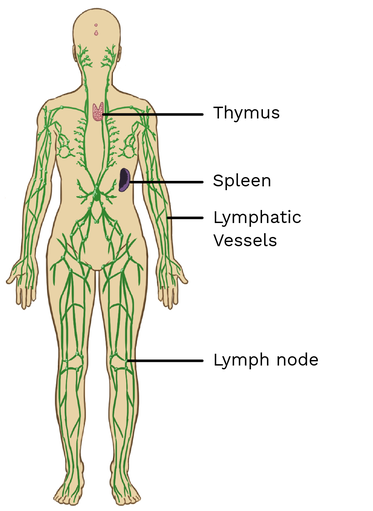
Lymphatic System